Talk About It: How Can We Make Texture in Art?

Updated: Oct 11

The big idea: Farm materials look and feel different, and artists can recreate those textures in their pictures.
A farm is full of textures. Wool is fluffy, feathers are soft, straw is scratchy, wood is rough, soil is crumbly and leaves are smooth. Texture is how something feels when you touch it, and it is also how it looks. You can often tell that wool is fluffy before your hand gets there. Artists recreate those textures in two ways. They add materials you can really feel, like cotton for wool. Or they make marks that look the way a thing feels, like short, scratchy lines for straw.
Questions to ask
"How does this feel: soft, rough, smooth or scratchy?"
"Does wool look soft? How can you tell before you touch it?"
"What could we glue on to make a sheep's wool? What about a hen's feathers?"
"Can you draw lines that look scratchy, like straw?"
Show it in one minute
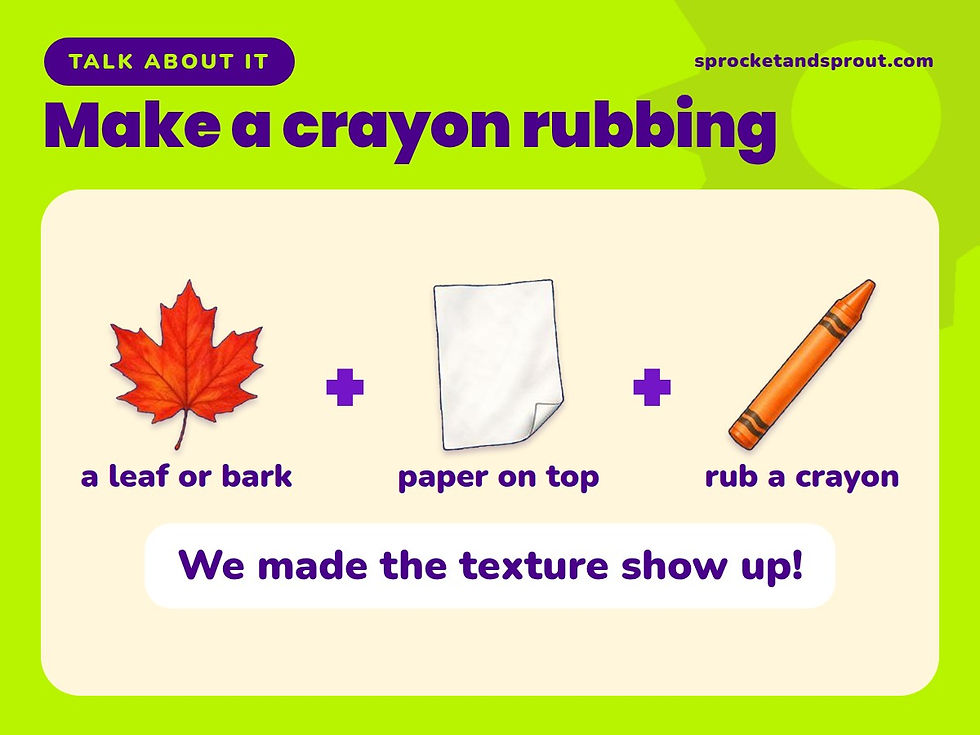
Make a crayon rubbing. Put a leaf or a piece of bark under a sheet of paper. A wooden board works too. Rub the side of the crayon over the top and watch the texture appear. You just recreated a texture, the way artists do.
Keep it going
Go on a texture hunt and find one thing that is fluffy like wool, one that is scratchy like straw and one that is rough like wood. Then look back at Thursday's collage. Which parts can you really feel, and which parts only look that way?
Want to learn more?
Have Fun with Textures, from Tate Kids
Toddler Tuesday: Terrific Textures, from the Georgia Museum of Art
Texture Rubbings, from Discover the Forest
Shop these items
Everything mentioned in this post, in one place. As an Amazon Associate we earn from qualifying purchases.
More for this week: see all our Farm activities, Letter F activities and Number 6 activities.
Comments